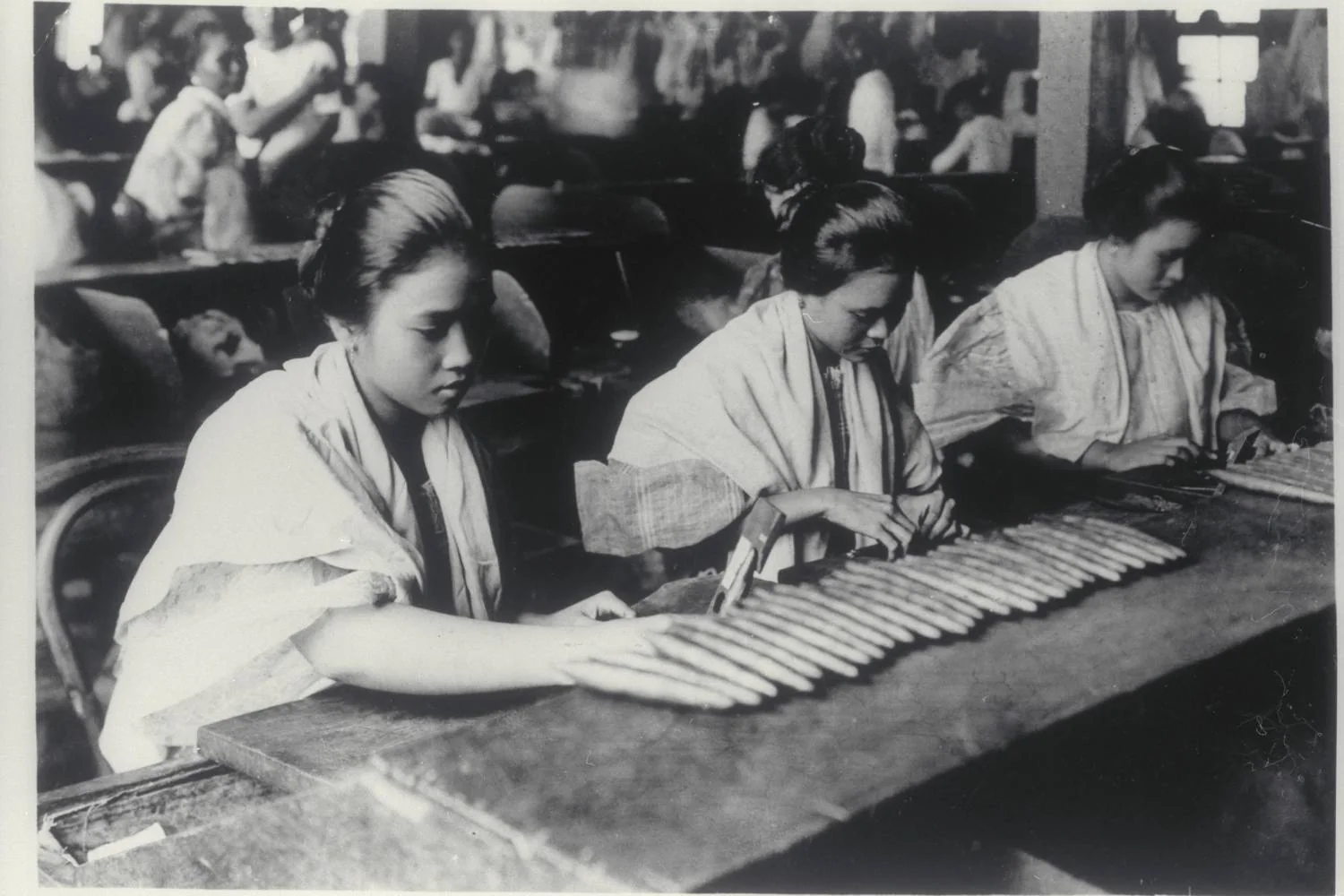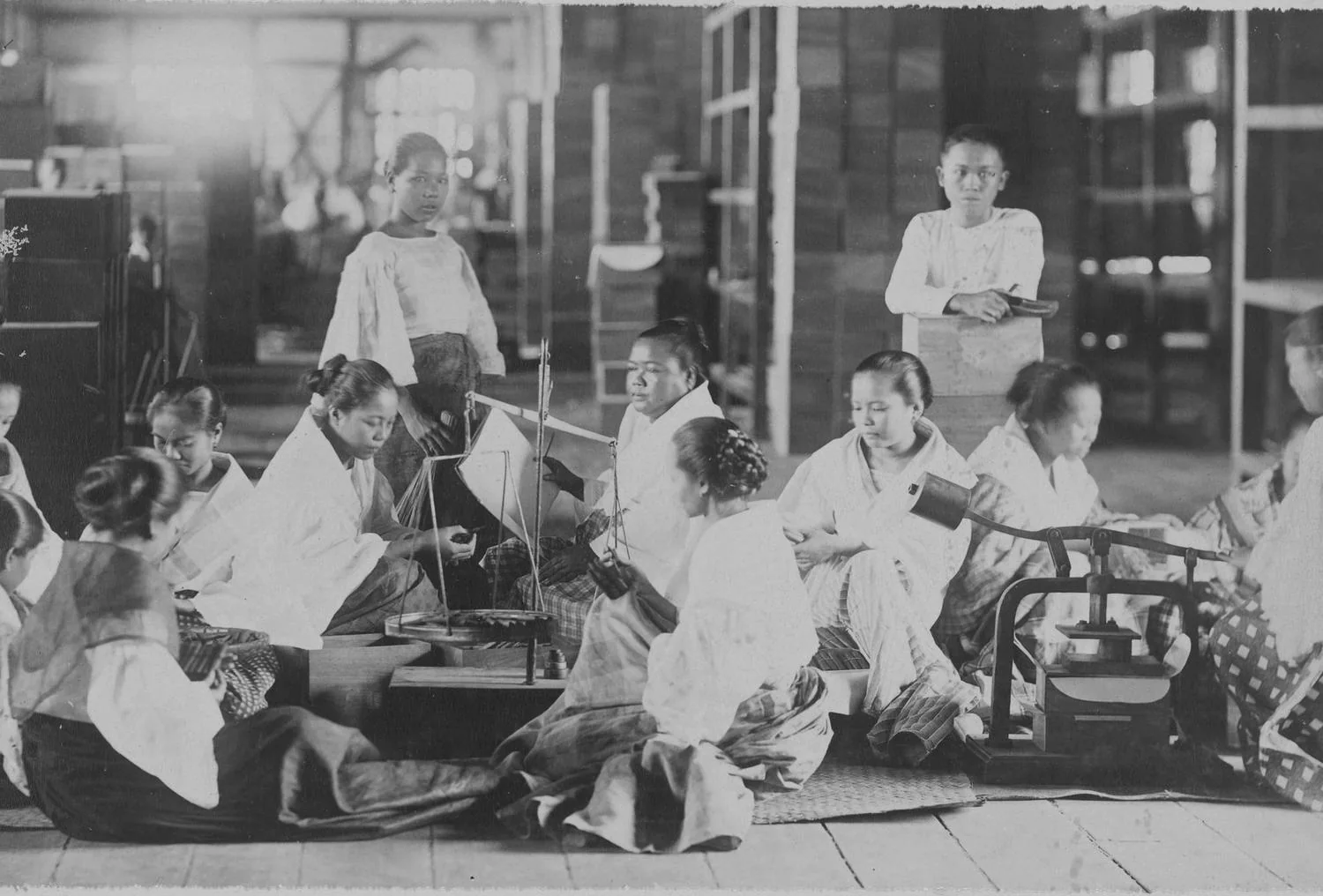
People ask what makes a cigar hand-made, and whether it matters. It matters, and the answer is a method that came from Havana and has been used in Manila for as long as anyone can document. Here it is, step by step, as it is done at the bench in Laguna.
A cigar is three kinds of leaf. The filler, the leaves inside, which give the taste and the strength. The binder, the leaf that holds the filler together. The wrapper, the leaf on the outside, which gives the look and much of the aroma. The Cuban method is a way of putting the three together with the hands, a blade and a wooden mould, and its point is a cigar that draws evenly from the first inch to the last. Every step below exists for that reason.
The bunch
The roller takes two to four filler leaves, sorted the evening before by strength and position on the plant, and folds them lengthwise so that air can travel through them. There are two schools. In the accordion, or booking, the leaves are folded over each other like the pages of a book. In entubado, each leaf is rolled into a tube on its own and the tubes are gathered together, which takes longer and gives the most open draw. Ronnie, who has done this for twenty-two years, does a version of the second for the Robusto Maduro and the Toro, and books the Corona because its ring is too small for tubes. The strongest leaf goes in the middle, where it burns last.
The binder and the mould
The bunch is wrapped in the binder leaf, spiralled tightly from foot to head, and set in one of the ten hollows of a wooden mould. The mould is closed, pressed, and left for half an hour; then opened, the bunches turned a quarter, and pressed again, so the seam does not leave a flat side. A bunch that goes into the mould too tight comes out a stone and will not draw. Too loose and it burns hot and fast. The roller feels the difference with a squeeze before the mould closes, and that squeeze is what twenty-two years are for.
“The mould does not make the cigar. It only tells you whether you made it.”Ronnie · roller · Laguna
The wrapper
The wrapper leaf is the expensive one, chosen for its colour and its lack of veins, and it is cut on the bias with the chaveta, the crescent blade, so that it stretches as it wraps. The roller lays the bunch on it and rolls, with the flat of the palm and the thumb, from the foot up to the head, keeping the tension even. A maduro wrapper, thicker and oilier, is rolled slower and slightly warm. At the head the leaf is finished with a cap.
The cap
One piece of wrapper leaf makes a cap that holds. Two make a better one. We make three, cut as small rounds and set one on the other with a fingertip of vegetable gum, each smoothed before the next: the triple cap that the Cuban factories use for their best cigars. It takes an extra minute. It is why a Basco y Vargas cut cleanly and does not unravel in the last third.
After the bench
Every cigar goes through a draw machine, and the ones that fall outside two marks go back. Then a rest in the cedar room, weeks at least, so that the humidity of the three leaves settles to one. Then the band, the box and a Boveda pack at 69 %. The whole route, from seed to box, is on the Craft page, and the six minutes at the bench are on film.